


We were fortunate to be awarded funding by Inspiring Australia in both Adelaide and Canberra to run our respective events for National Science Week — and, for once, there was no lab work involved! Instead, we focused on meaningful reflection and debate about the future of agriculture.
‘The Future of Agricultural Crops: To Edit or Not to Edit’
by Michail Ivanov
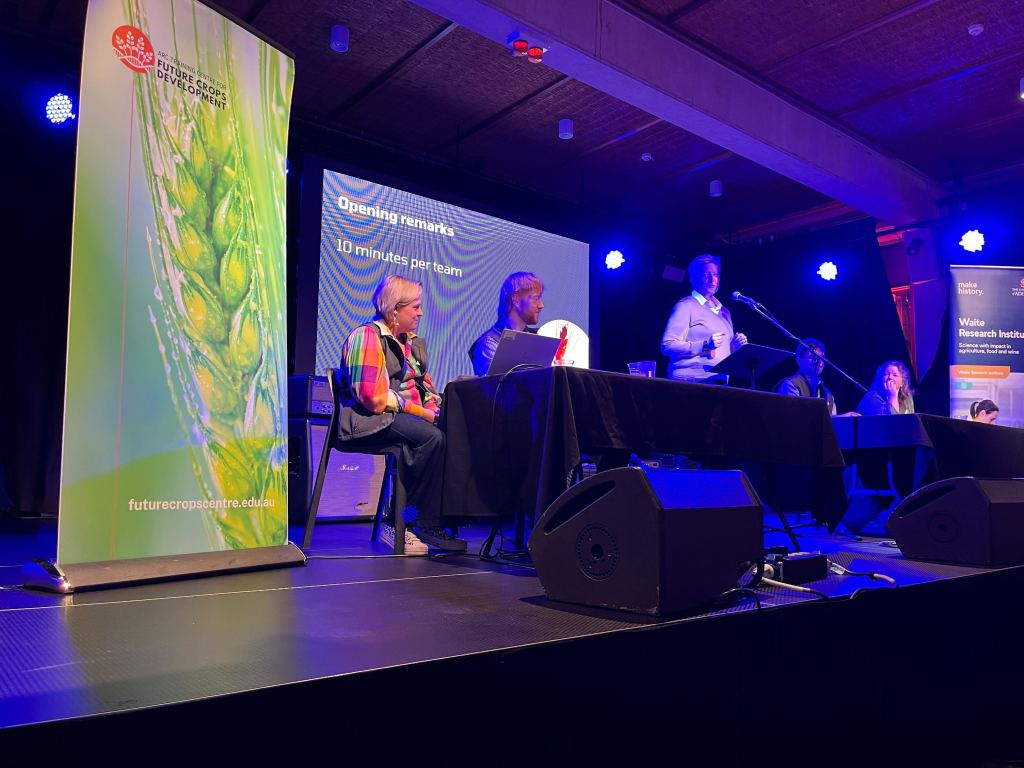
On 11 August, I had the pleasure of sharing the Adelaide UniBar stage with Emily, Jenny, Joan, Stu and Alex as part of our Science Week ‘The Future of Agricultural Crops: To Edit or Not to Edit’ debate on genome editing (GE). Regrettably, the drums were taken off the stage before we started, so it was more a debate than the talent show it could’ve otherwise been. Nevertheless, it proved an informative and entertaining night. Emily’s organisation and hosting was most appreciated, as was Stu’s great succinct summary on GE and what it entails. We then engaged in the debate (Jenny and I on the ‘Yes to GE’ side and Joan and Alex on the ‘No to GE’ side), which proved challenging at times as it required some brain work, which, by 6pm on a Monday is a tough ask.
It was a good opportunity for us to test our science communication skills and present views which aren’t necessarily ones we would otherwise hold, but which are pertinent to our research. And, of course, it was a great opportunity for me to catch up the Waite team. Likewise, it was a pleasure, as always, to see Joan who is otherwise hard at work in the nation’s cold capital. At the conclusion of the event, the audience voted that the ‘Yes to GE’ team had won. In a sense, however, we were all winners (though some greater than others; i.e., Jenny and I).
We had a number of researchers and postgraduate students in the audience who seemed quite engaged by the debate (I would attribute that to our exceptionally engaging demeanour). The event was good not only insofar as it provided some nuanced perspectives on GE and the arguments in favour of and against its use, but also as a socialising opportunity (or, to use a term I more so detest – a networking opportunity). It gave us, the panellists, an opportunity to talk to the attendees about our own research after the conclusion of the event and greet some familiar faces. A successful Science Week event and, above all, a great Training Centre initiative.

The ‘YES’ Team


The ‘NO’ Team


The debate went really well, it was a very enjoyable evening in the end. Despite it being a public event, I felt that a large proportion of the members of the audience were university affiliated – it would be great to run a similar event in front of a more general audience and a wider range of ages and occupations. Unfortunately we only had time to take around 5-10 minutes of questions from the audience at the end of the session, but the questions were well articulated and well thought out. It was a really good dynamic and mix of students and academics on stage, which helped a lot to keep the atmosphere light hearted and fun. It was also incredibly useful to have Emily acting as debate moderator, as she did a fantastic job of keeping everybody on track and within the time limits. I feel as though a really useful Training Centre activity that helped a lot with the debate was the exercise we did in Kioloa where we had to summarise our work in 1 minute, 30 seconds and 15 seconds, because it gave really important experience in getting across the most important details in a clear manner in a very small time frame.
Alex
I really enjoyed the SciWeek debate. Like Alex said, the audience largely comprised uni-affiliated individuals, but it would be good to expose the general public to events like these. I know the debate was technically a public event, but it was just the case that most attendees were uni-affiliated. Like Alex said, as well, more audience engagement would have been fun, but also would’ve shown what sort of things the audience got from the event, or what they’re thinking about. So, I suppose there’s an idea there around open and engaging discourse (while maintaining an element of entertainment). Like I said in the newsletter, I was really impressed with everyone at the event and Emily did a great job organising it all.
Michail
Exploring the future of agriculture together
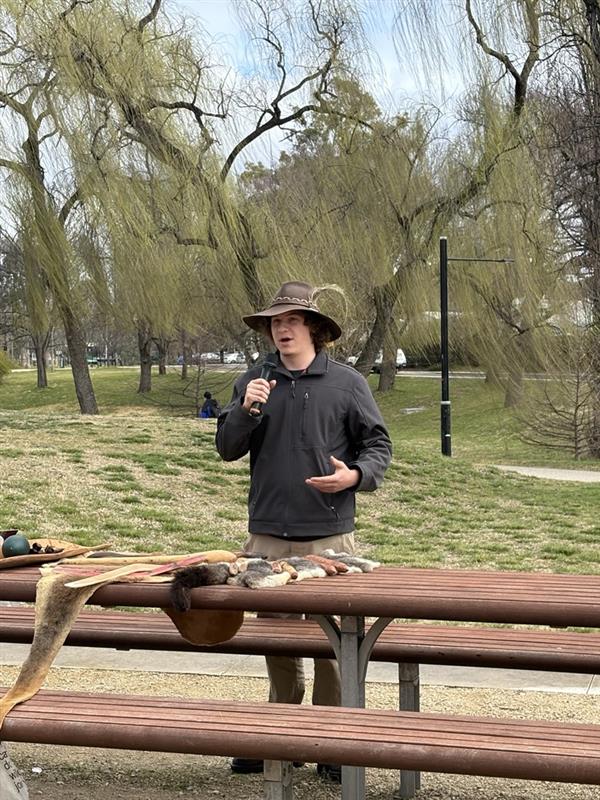
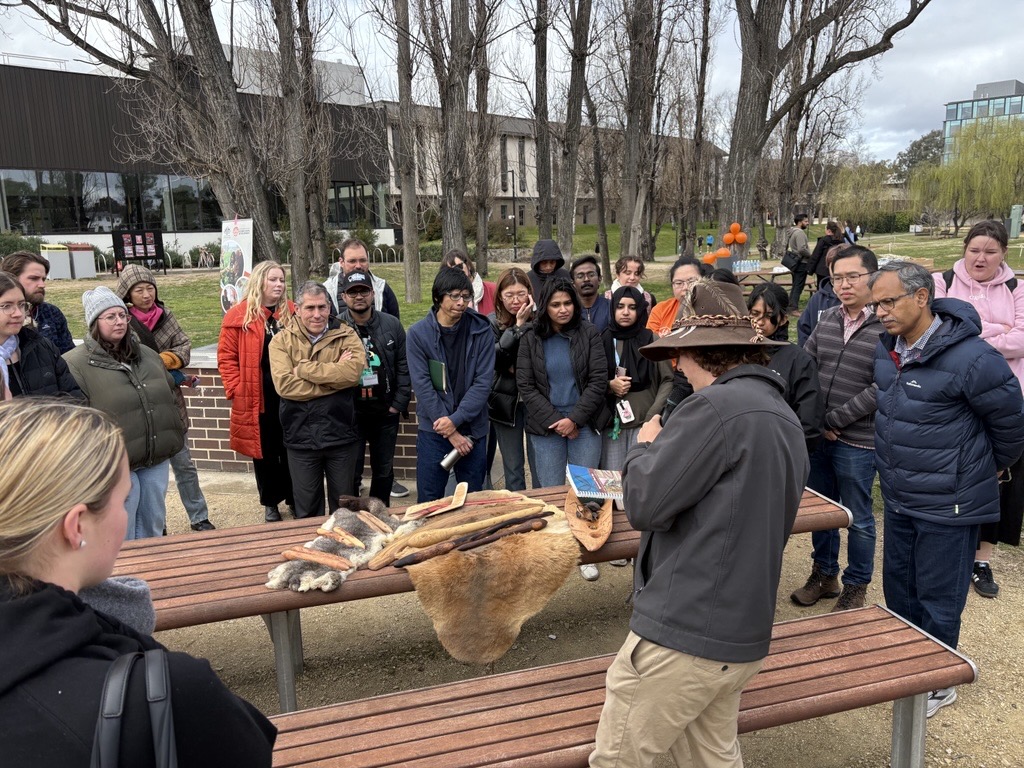

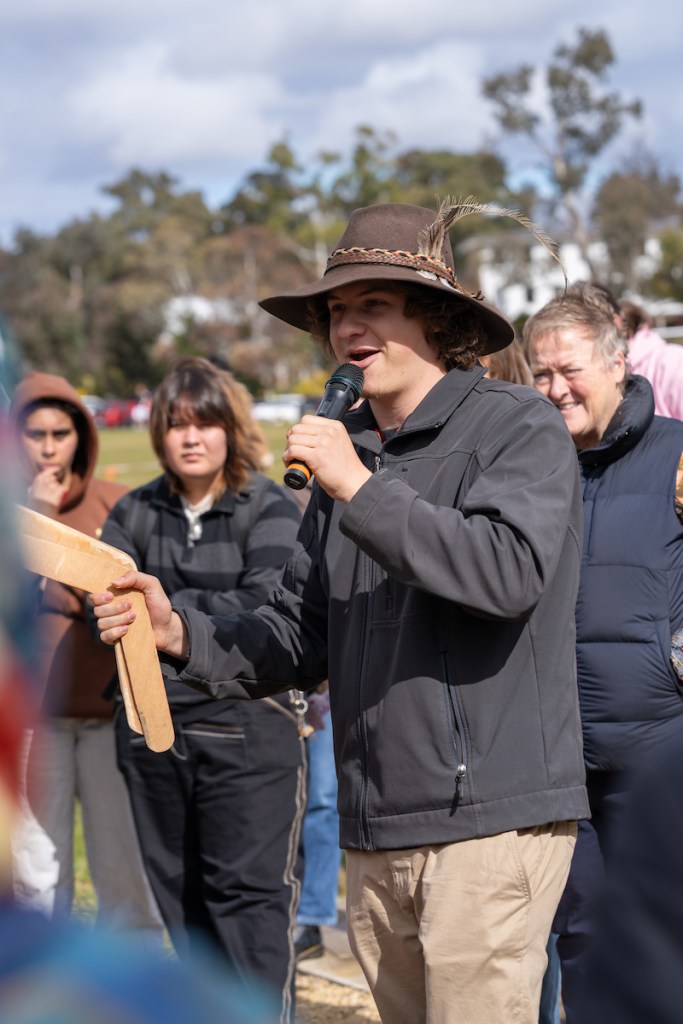
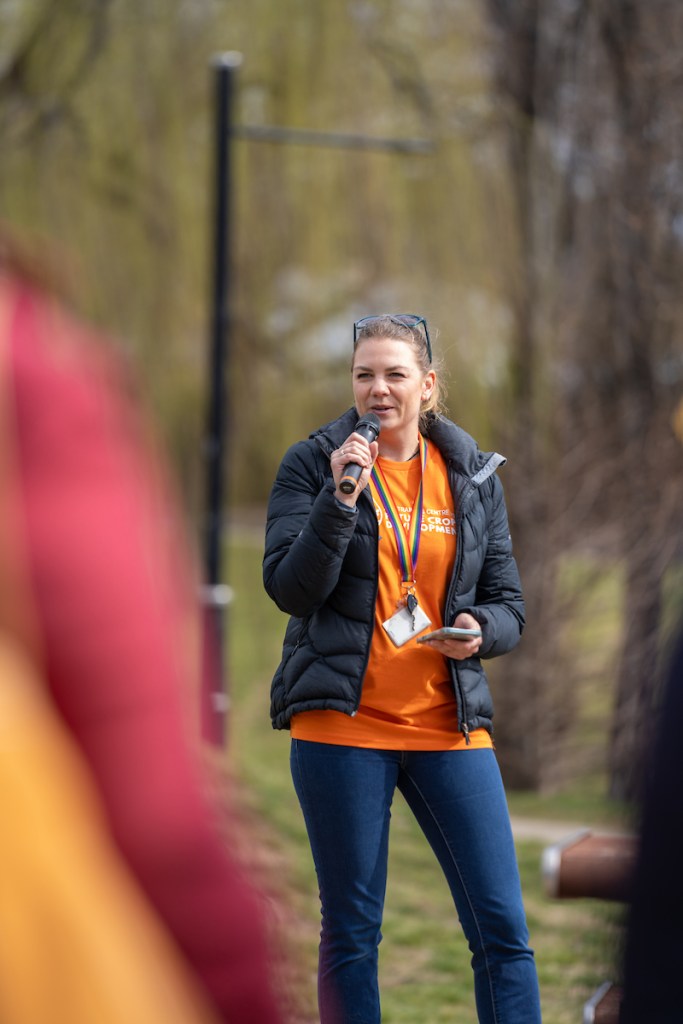
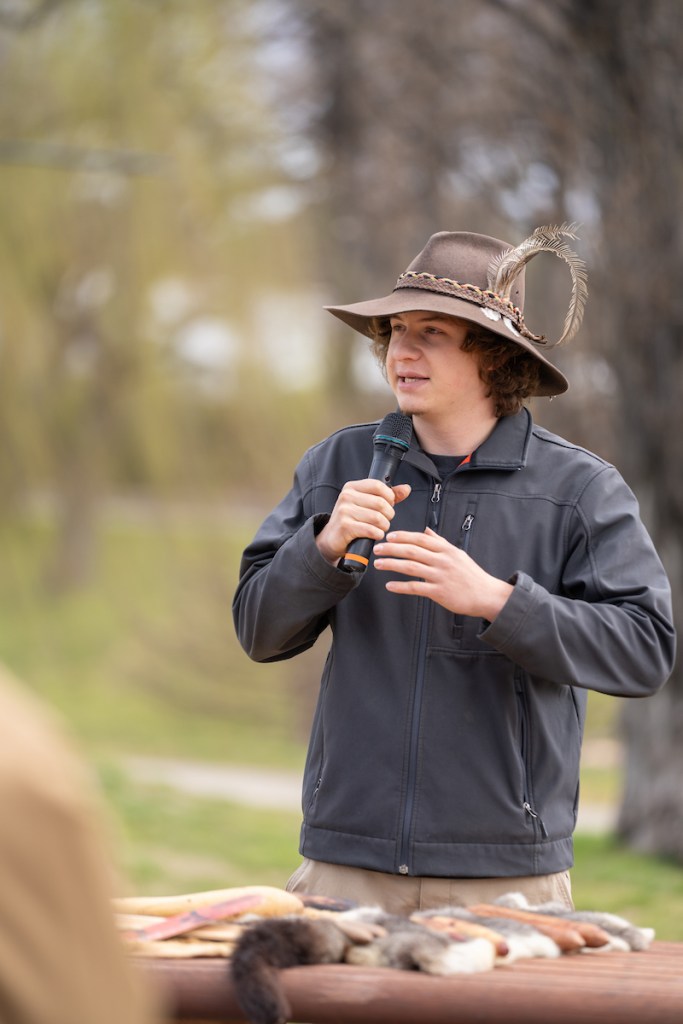

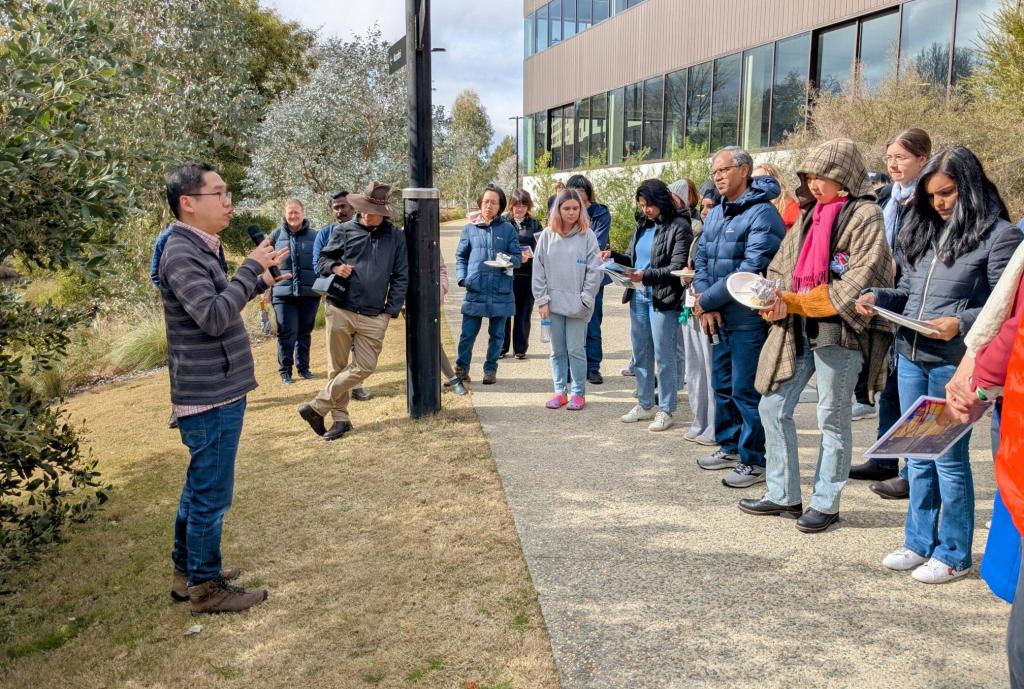
On 20 August, the ACT node hosted an event as part of National Science Week: Exploring the future of agriculture together. At the program, we had two excellent speakers: Noah Smith, a Gomeroi person, and Kai Chan, Centre Deputy Director – Research.
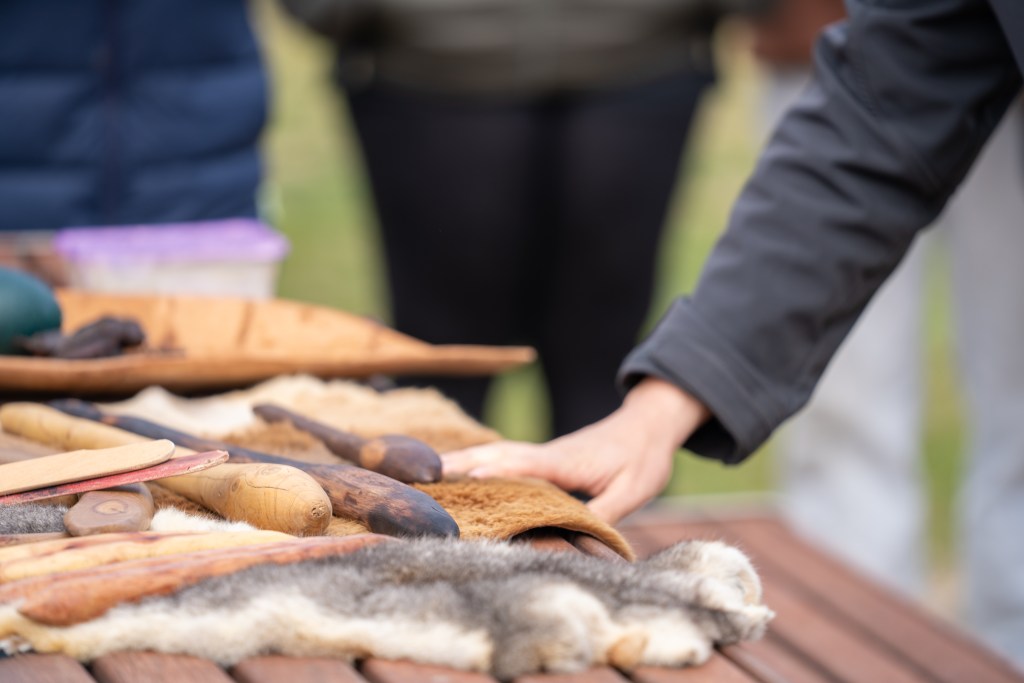
Noah shared insights into his culture and demonstrated traditional tools used for fishing, digging yams, and hunting kangaroos, as well as showcasing large emu eggs. He explained how his people live with the Land, respect it, and adapt their lifestyle according to the seasons. He also gave us a “tour”, just a 100-metre walk, pointing out significant native plants used by First Nations people for food, tools and medicine. We could have listened to him for hours!
To complement his talk, we were catered by an Aboriginal-owned business ‘Koori Kulcha’ serving up bushfood. Wondering what that included? Think crocodile hot dogs, kangaroo and emu sausage rolls, gyoza, Warrigal green puffs, sweet potato quinoa bites, and lemon myrtle or Davidson plum muffins. The food disappeared quickly—I didn’t even get the chance to take a photo or try any myself!
Kai then explained his project on cultural burning practices, developed in close collaboration with Paul Girrawah House (ANU First Nations Portfolio).
We were delighted that the event drew participants from outside our School, including First Nations students, librarians, and colleagues from the Department of Agriculture. The feedback was overwhelmingly positive, with comments requesting “please do it again!”