
By Ava Wilkinson and Sadia Majeed (ARC Training Centre for Future Crops Development)

(Source: Majeed’s Personal Collection [Photograph])
The seed industry gathered in Christchurch for Seed Business 2025, a three-day event that brought together leaders, researchers, policy experts, and business representatives from across Australasia and beyond. Hosted at the Te Pae Christchurch Convention Centre, the event highlighted the critical role of seed innovation in shaping the future of agriculture, trade, and food systems.
Students from the ARC Training Centre for Future Crops Development, Ava Wilkinson and Sadia Majeed, had the opportunity to attend thanks to the generosity and support of Seed & Grain New Zealand, the Australian Seed Federation, Enza Zaden, and the ARC Training Centre for Future Crops Development.
Planting Ideas on Day One
Tuesday opened with a hearty breakfast and a pep talk from the head coach of NZ Rugby team the Crusaders, Rob Penney, who drew parallels between rugby and resilience in business. The official welcome by Charlotte Connoley (SGNZ) and Tim March (ASF) was followed by the Gene Technology Forum, chaired by Dr Zahra Champion (BioTech NZ). Researchers and industry leaders set the tone with in-depth discussions on gene technologies. Dr John Caradus (Grasslanz Technology) reflected on coexistence issues in New Zealand and the importance of learning from Australia as New Zealand brings forward changes to gene technology, while Dr Carl Ramage (Rautaki Solutions) shared the Australian journey towards market acceptance of crops derived from biotechnology. The theme was clear: regulations must evolve as quickly as science. Osman Mewett (BASF) urged the industry to “future-proof” its policies by designing them with foresight and adaptability to remain effective and relevant amid evolving social, technological, economic, and environmental conditions. Dr Shai Joseph (FSANZ) provided an update on P1055 regulations where changes to the Australia New Zealand Food Standards Code (the Code) are now gazetted to update definitions for genetically modified (GM) food. Finally, Dr Tony Conner (AgResearch) looked ahead to how gene technology could transform arable cropping.
In the afternoon, working groups and AGMs brought together members across grains, turf, services, and native seeds, reinforcing the collaborative heart of the sector. Wilkinson attended the ASF General Meeting and noted how great it was to see the initiatives and work led by the Federation, as well as their impact on the industry. The day closed on a high note with a cocktail function hosted by Christchurch Mayor Phil Mauger.
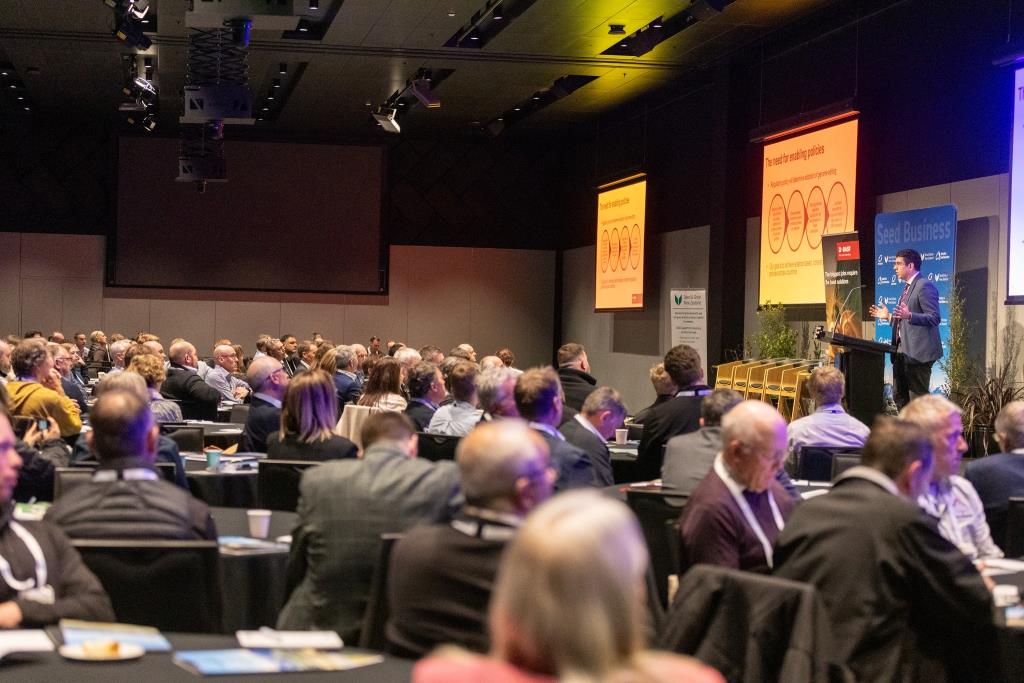
The importance of future-proofing regulations to enable plant breeding innovation: Osman Mewett, BASF
(Source https://www.facebook.com/AustSeedFed)
Facing the Future on Day Two
Wednesday’s program looked outward. A ministerial address from Hon Nicola Grigg underscored government support for innovation and trade. Dr Victoria Hatton (FoodHQ Innovation) sparked debate by asking whether plant-based protein is a passing fad or a fundamental shift. The conversation reflected a broader global reality — protein demand continues to rise, and consumers are increasingly seeking cleaner, more sustainable options. While enthusiasm for ultra-processed plant-based foods has waned, the focus is shifting toward whole-food, minimally processed protein sources. With growing ethical and environmental awareness, this movement appears less a fleeting trend and more a sustained transition toward healthier, climate-resilient food systems. Meanwhile, Ronald Chan (Incotec Australia) highlighted the challenges posed by microplastics in seed coatings, and Alistair Pullin (Agrimm Technologies) championed biologicals as the next frontier.
The global backdrop loomed large as Jason Lewthwaite (BNZ) spoke about building resilience in agri-food supply chains amid rising global uncertainty. He highlighted how war, conflict, and sanctions are disrupting trade and impacting business confidence, emphasising the need for adaptive supply chains and stronger risk-mitigation strategies. Meanwhile, Leigh Moran (Counsel House) unpacked geopolitical complexities. A panel on ANZ collaboration reinforced the power of regional partnerships.
The afternoon sessions reminded delegates that the industry must not only innovate but also protect its reputation and resilience. Dr Matthew Nurse (ARC Training Centre for Plant Biosecurity, ANU) warned of the dangers of misinformation in food systems, and Dr Abigail Durrant (MPI NZ) detailed emerging biosecurity risks.
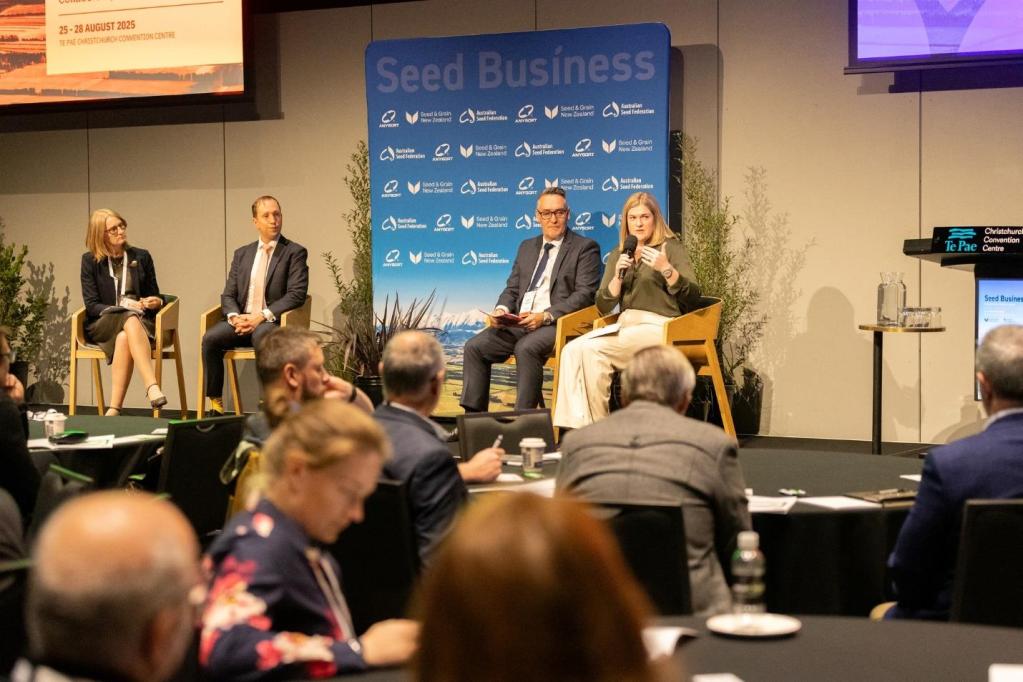
Panel discussion: Strengthening ANZ relationships for the seed industry. Katherine Delbridge, Leigh Moran, Jason Lewthwaite, Sarah Clark
(Source https://www.facebook.com/AustSeedFed)
Celebrating the Industry
Networking wasn’t an afterthought; it was central. It ranged from the Women in Seed cocktail hour with Dr. Elena Duter, Head of Agronomy Technical Field Growth at Farmlands, to the black-tie Gala Dinner at Christchurch Town Hall, featuring awards and entertainment. The event highlighted community spirit and accomplishments.
During the Women in Seed session, Dr Duter shared her inspiring career journey, highlighting the importance of resilience, lifelong learning, and embracing opportunities at any stage of life. She completed her PhD part-time over a period of five years. She described it as one of the most rewarding periods of her life, encouraging everyone, especially women, to enjoy their PhD journey and embrace it with confidence. Her story was deeply motivating and resonated with many participants, with Majeed reflecting that it reminded us that courage and determination can make any stage of life the right time to pursue our goals.
Closing Out with a Field Day
The field day provided a fascinating opportunity to see research and industry working in tandem. The day began at the renowned PGG Wrightson Kimihia Research Centre, a 250-hectare facility dedicated to cutting-edge plant breeding. Participants explored advanced breeding programmes focused on forage grasses, clovers, pasture herbs, turf grasses, and grain and forage brassicas. It was inspiring to see how innovation and long-term breeding efforts are shaping the future of seed development in New Zealand.
The tour continued with a visit to Luisetti Seeds, a proudly family-owned business operating since 1932. With state-of-the-art facilities in Rangiora and Ashburton, Luisetti Seeds specialises in cereal and ryegrass cleaning and packing. Their precision and care demonstrated the level of expertise required to maintain seed quality from research through to commercial delivery.
The day concluded with a brewery tour and tasting at Two Thumb Brewery, where quality craft beer meets sustainability. The solar-powered facility utilises rainwater catchment and an advanced wastewater treatment system, ensuring every batch is both exceptional and environmentally responsible.
Majeed reflects that overall, the field day was not only educational but also deeply motivating. Seeing the integration of science, business, and sustainability reinforced our appreciation for the collective effort behind every seed that reaches a farmer’s field.
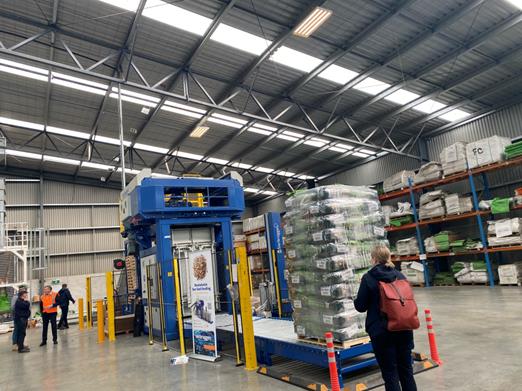
Luisetti Seeds NZ
Premium treated barley seeds, carefully bagged, stacked, and securely wrapped using automated packaging for quality and convenience.
(Source: Majeed’s Personal Collection [Photograph])
A United Industry
By its close, Seed Business 2025 had made clear that while the sector faces unprecedented change, it is equipped with the knowledge, partnerships, and passion to thrive. Wilkinson and Majeed express their sincere gratitude to Seed & Grain New Zealand, the Australian Seed Federation, Enza Zaden, and the ARC Training Centre for Future Crops Development for their generous support, which made their participation possible. Wilkinson and Majeed would like to sincerely thank Katherine Delbridge for her wonderful support and for making this opportunity possible. As a valued partner of the ARC Training Centre, Katherine continues to create incredible opportunities for students, such as Seed Business 2025.
Wilkinson reflected that the experience was invaluable, offering direct engagement with industry leaders and peers, fresh insights into current challenges, and lasting professional connections. She found it especially encouraging to see strong trans-Tasman collaboration, with Australia and New Zealand learning from each other as new gene technology regulations take shape in New Zealand. The discussions reinforced for her the importance of continued dialogue between researchers, policymakers, and industry to ensure innovation is matched with transparency and trust. Inspired by the experience, Wilkinson is eager to bring these insights back to her work within the ARC Training Centre and contribute to shaping a future-ready, globally connected agricultural sector.
Majeed similarly reflected that attending Seed Business 2025 was an eye-opening experience that brought together science, industry, and leadership in a truly inspiring way. She found it motivating to learn from experts across both countries, to hear Dr Elena Duter’s story of perseverance, and to see firsthand how innovation and collaboration continue to drive the seed sector forward. Majeed left the conference feeling proud and encouraged to be part of such a vibrant and supportive industry.
Both Wilkinson and Majeed were deeply appreciative of the investment made in fostering the next generation of researchers and professionals, and they look forward to strengthening these connections as they continue to grow within the industry.