
University of Adelaide ABLE Conference – Ava Wilkinson
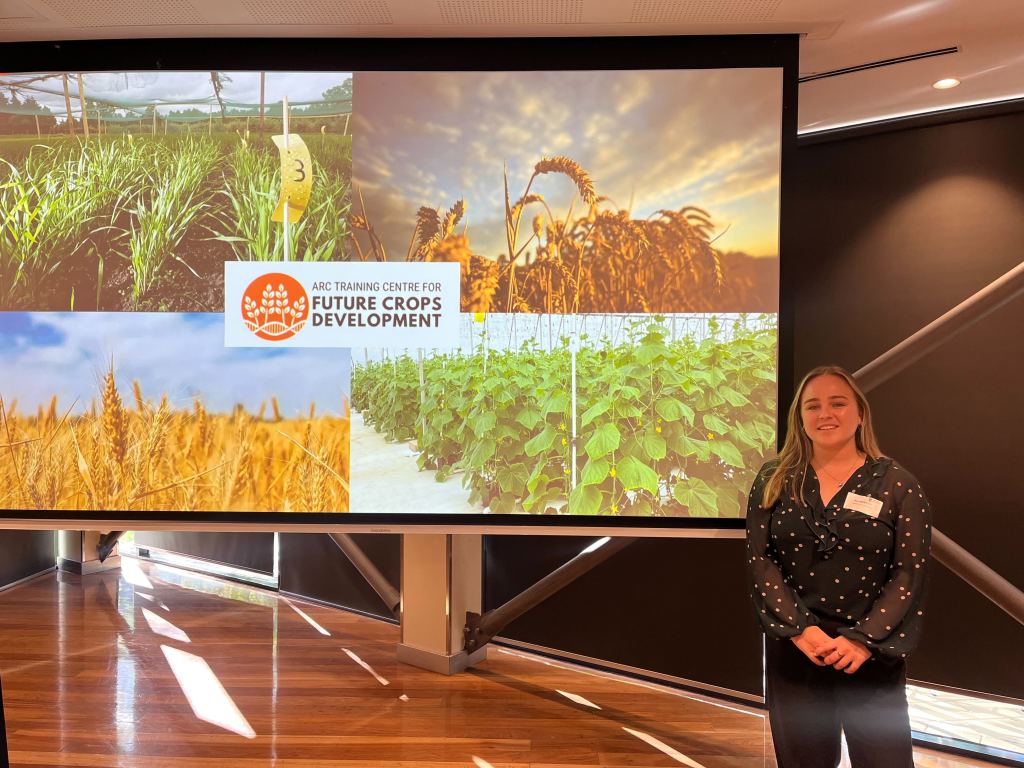
I was fortunate enough to be selected to present at the ABLE (Arts, Business, Law, and Economics) Higher Degree by Research Conference. The conference program included research presentations, panel discussions and professional development sessions. I had the opportunity to present with a panel of students who all fit under the theme of ‘Food, sustainability & social responsibility.’ I presented the following abstract:
“Unlocking the future of crop technology is not only about adapting to the market, but shaping it. The market for Future Crop Technologies requires wide-scale change to gain acceptance and further develop. Future crop technologies encompass a number of advancements, from genetic modifications and synthetic biotechnology to AI and machine learning platforms. These innovations hold the key to enhancing crop productivity, sustainability, and global food security. This research project aims to understand how managers, organisations, and other market actors (i.e. regulators) attempt to deliberately influence or transform the market for Future Crop Technologies. Market-shaping emerges as a viable strategy to transform the agricultural landscape and shape the future crop technologies market. Market-shaping involves the intentional shaping by firms and market actors of market structures, expectations, and practices, amongst other factors. This research proposes to examine the theoretical bases that underpin the market-shaping concept, and the evolutionary nature of expressing, setting, and implementing market-shaping strategies through time.”
This was a great opportunity to showcase the research I am doing within my PhD, as well as, the work the ARC Training Centre is engaging in. There was great interest in and feedback from my presentation, which is exciting for the continuation of this research project.
International Plant Molecular Biology (IPMB) – Cairns
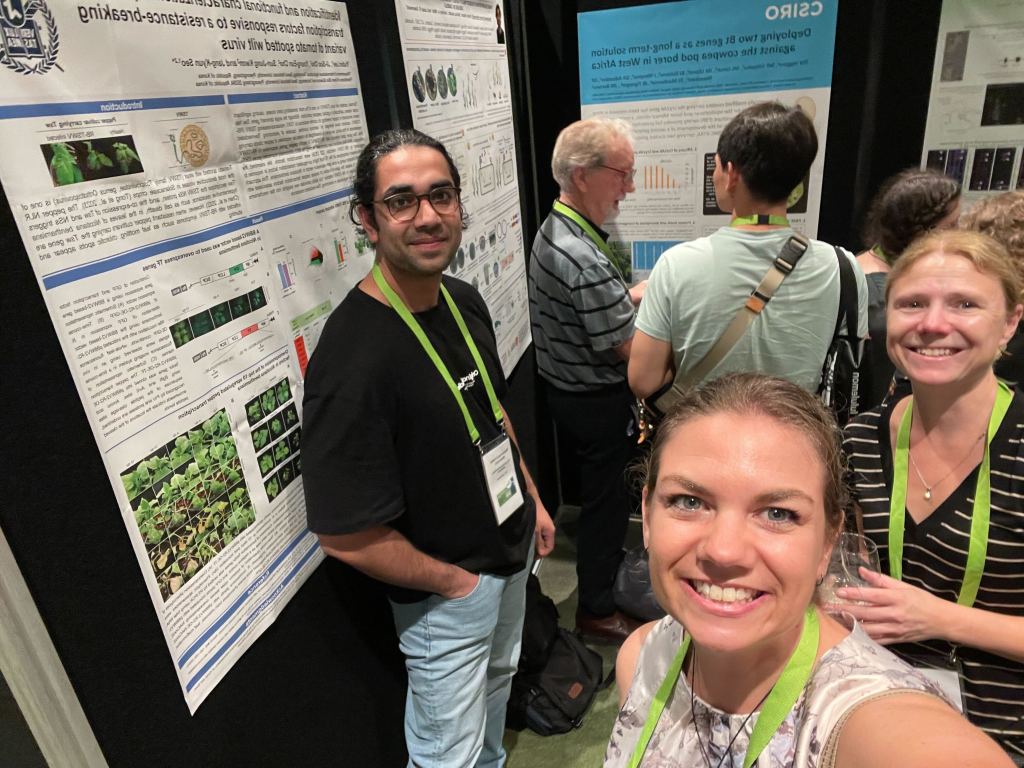
James Nix, Hendry Susila, Lucy Darragh, Arslan Mahmood, Barry Pogson, Tony Millar, Bob Furbank, Spencer Whitney, Matt Tucker, Ben Kurya, Kai Chan & Joana Melonek attended the conference.
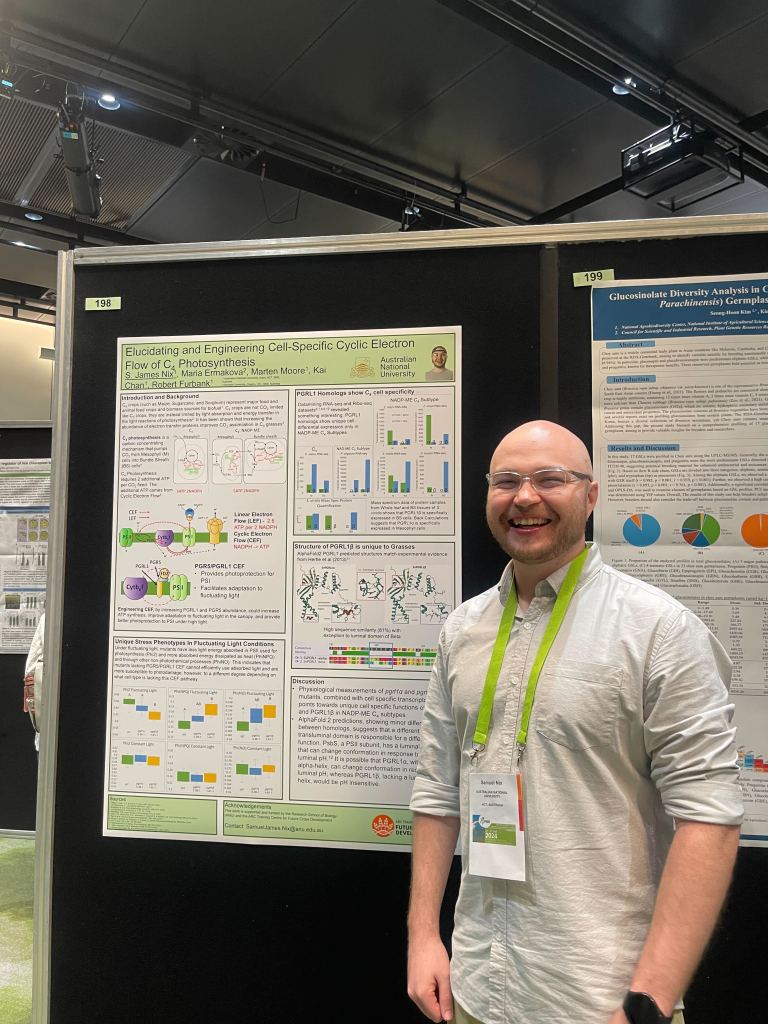
Poster Prize!
Congratulations to James for winning the best poster—what an achievement!
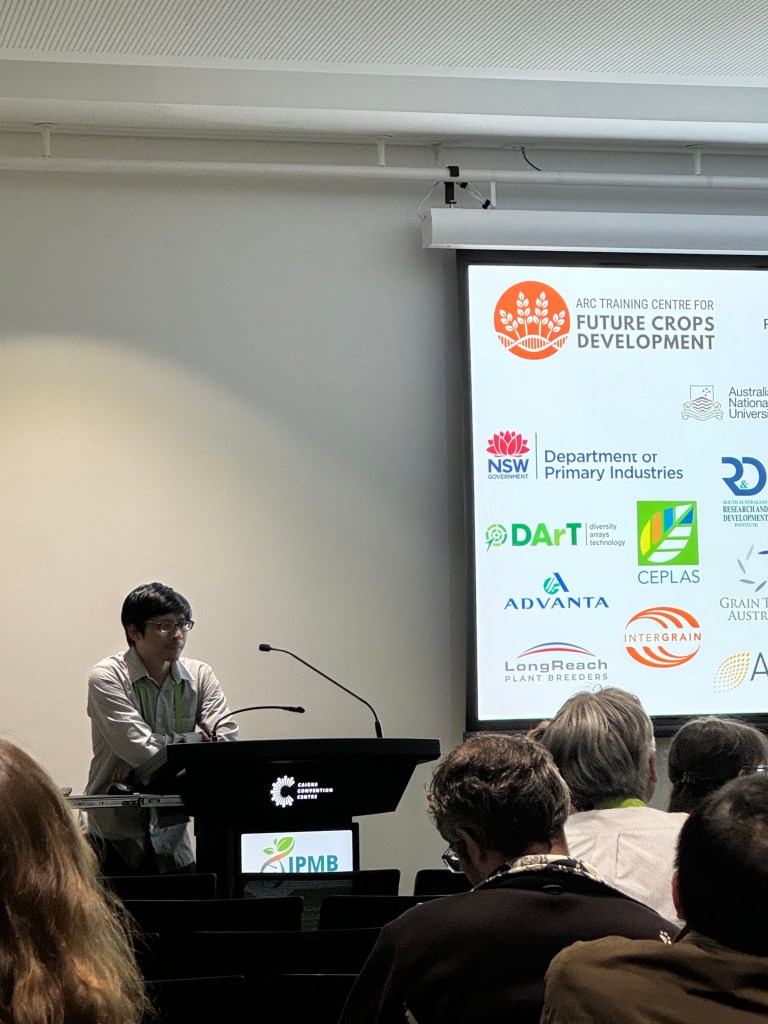
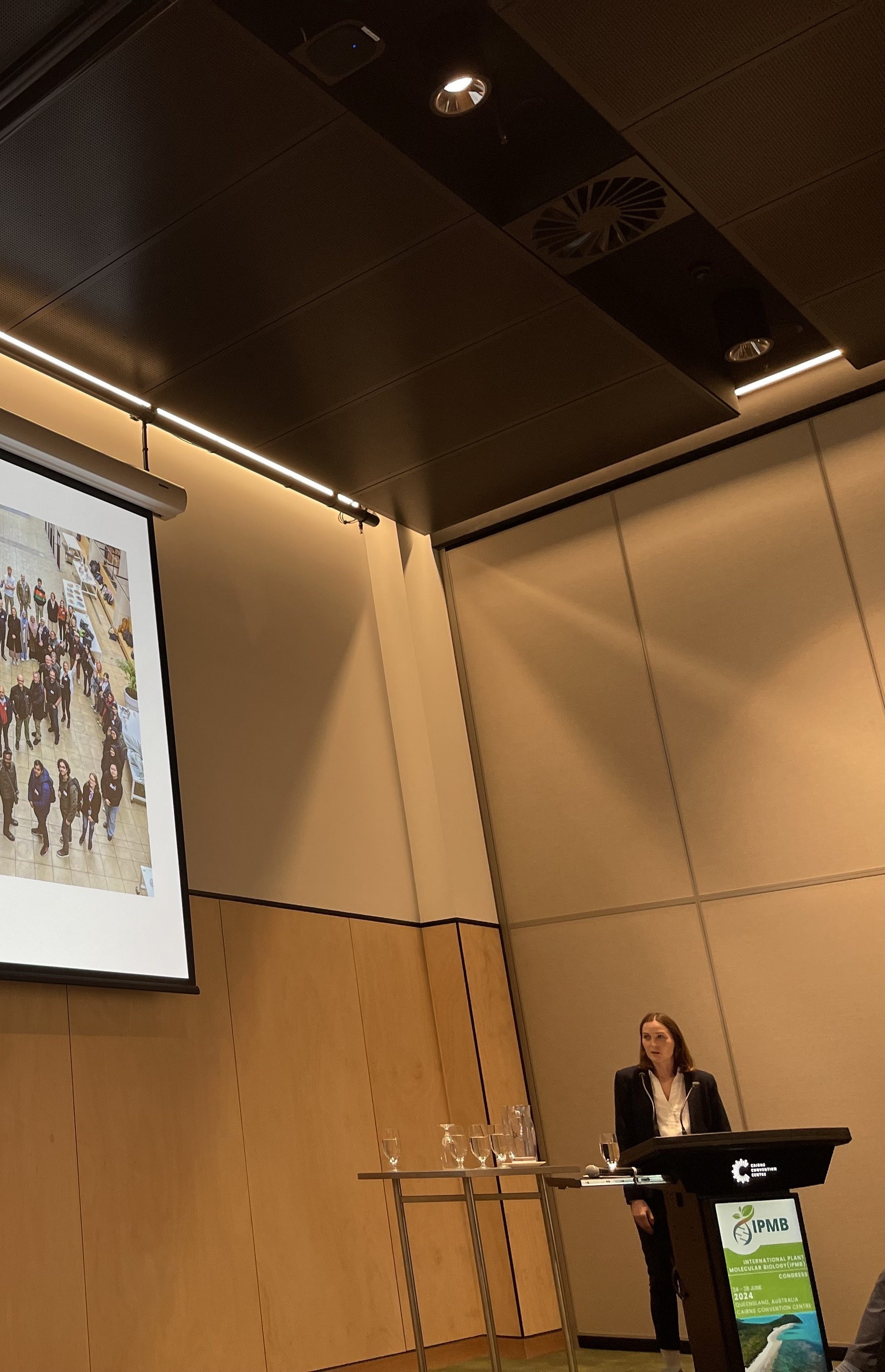
Talks
Hendry and Lucy delivered amazing talks
This year, I presented my first research poster at the International Plant Molecular Biology (IPMB) Congress in Cairns, Queensland, Australia. Over four days, I had the opportunity to engage with scientists and researchers from around the world. It was an incredible experience to discuss my research with a large audience and receive valuable insights. I also had productive discussions with Jacqueline Batley and David Edwards, who are working in the same research areas as I am. Additionally, I really enjoyed inspiring presentations and lectures that greatly motivated me. Witnessing the impressive research of fellow attendees was a significant source of inspiration for me. Moreover, conferences like IPMB offer a refreshing break from the lab and the city, providing a chance to enjoy new environments and connect with like-minded people. I am deeply thankful to the Australian Society of Plant Scientists (ASPS) for the travel award and to the Training Centre for Future Crops Development for funding my accommodation and meals. Arslan
Asia-Pacific Workshop on Engineered Living Materials – Caitlin Byrt & Neelam Gogoi
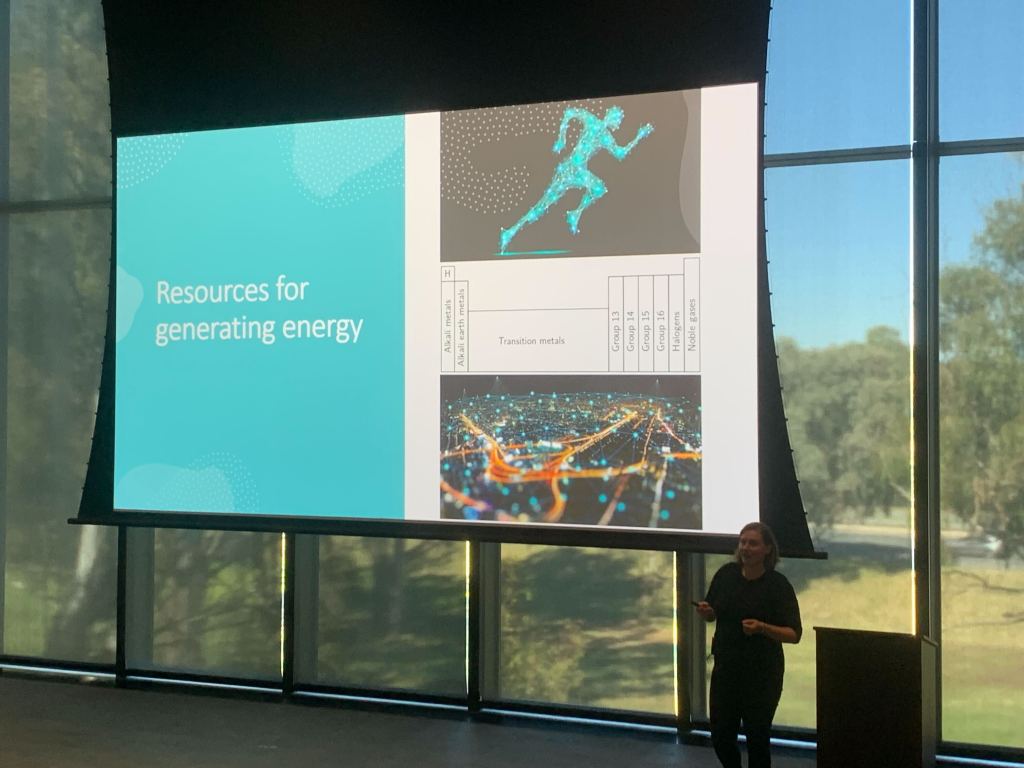

Caitlin Byrt gave a keynote on plant water recycling for a greener carbon footprint.
Neelam Gogoi received best poster award and get to give an invited talk at the workshop the following day.
Talk Title: Nanotechnology to tinker with a plant gene
Poster Title: Polymeric Nanocarriers engineered with CRISPR to accelerate gene editing in plants
International Conference & Expo on Biofuels and Bioenergy – Ebtihal Mohamed
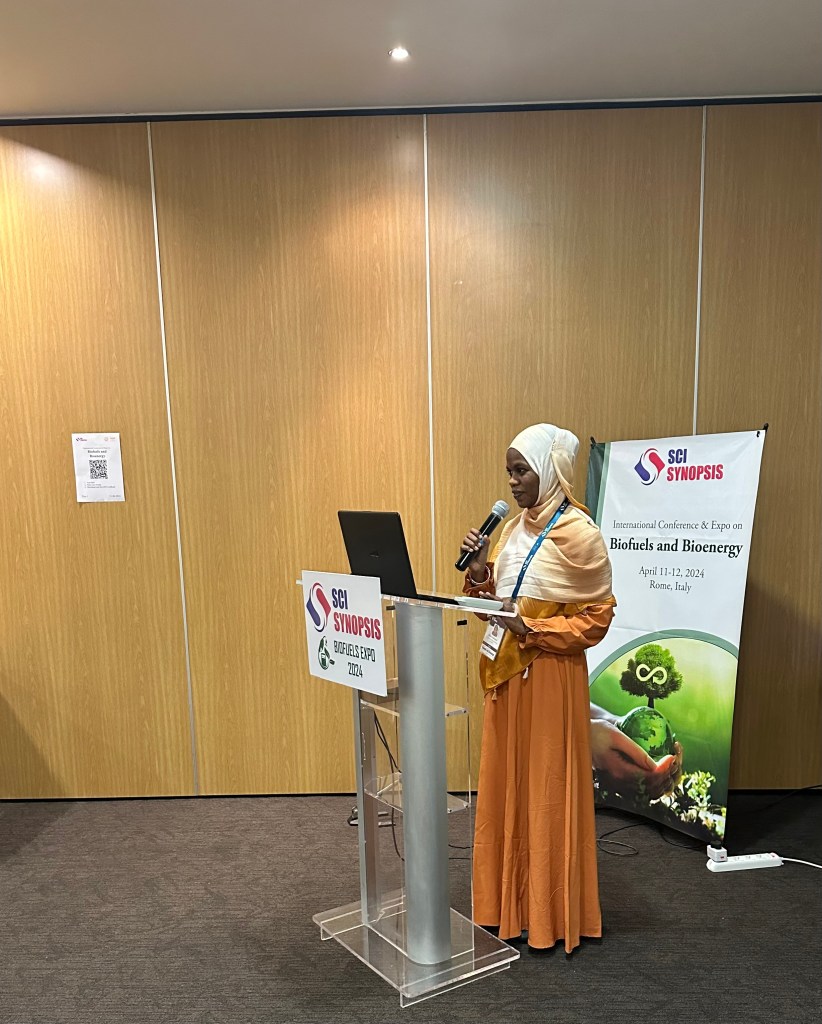
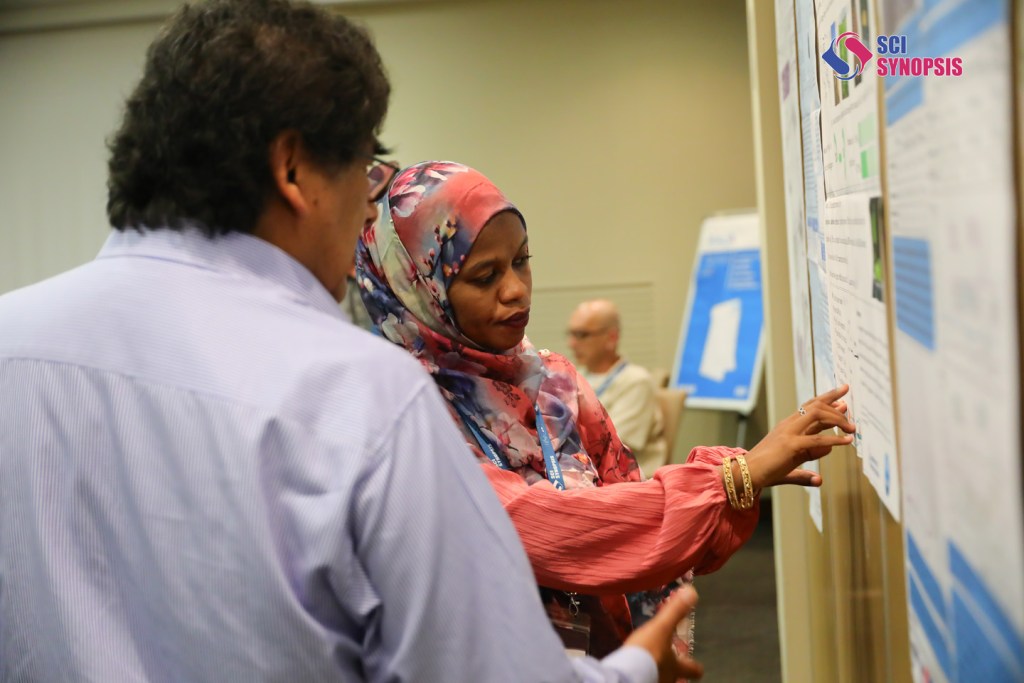
Ebtihal obtained HDR travel funds and Crawford funds to attend a conference on biofuels in Rome, Italy. She served as a conference moderator and presented her poster titled
‘Developing Brassica carinata as a biofuel crop’
Responsible Science and Innovation Forum – Arslan Mahmood, Lucy Darragh, Caitlin Byrt & Joan Leach
Earlier this month, the ANU’s Responsible Innovation Lab (RI-Lab) hosted the Responsible Science and Innovation Forum at the Shine Dome. Lucy and Arslan were excited to participate in this
thought-provoking event.
The forum was divided into 5 panel discussions: Governance and Regulation, Business and Entrepreneurship, Modelling and Computing, Education and Engagement, and Charting Paths
Forward. These themes provided a rich framework for exploring the intricate dynamics of responsible science and innovation.
The event brought together a diverse group of thought leaders from policy, industry, and academia, creating a unique opportunity for knowledge sharing, networking, and future
collaboration. Participants engaged in lively discussions, shared their expertise, and exchanged ideas on responsible innovation in various fields and contexts. According to Arslan,
“It was a great platform to learn about responsible science and the blue-sky thinking that results from responsible innovation”. Lucy, who is an RI-Lab member, said, “It’s not every day you get to bring together such a diverse group of people to spark meaningful conversations about the present and future of innovation. Moderating the Education and Engagement panel was also a fantastic experience.”
The event highlighted the importance of integrating ethical considerations into the innovation process and provided actionable insights for attendees to consider as part of their own research and practice. The discussions at the forum reminded us that the visible outcomes of innovation are just the tip of the iceberg. Beneath the surface lies a vast foundation of research, collaboration, and ethical considerations. It’s this unseen work that supports and sustains the breakthroughs we celebrate, making the foundational work in responsible innovation imperative for ensuring that innovative is both scientifically robust and socially responsible.
Caitlin Byrt participated in the day and was a panelist for the Education and Engagement session.
To learn more about RI-Lab’s work or the Forum speakers, visit their website.
Australian Bioinformatics and Computational Biology Society conference (ABACBS) – Dec 2023 – Piyumal Demotte

Piyumal attended this conference for a poster presentation about his research on phylogenetic dating. The conference brought together leading researchers, students, and industry professionals from across the Asia-Pacific region and beyond to share their latest findings and foster collaboration in the ever-evolving bioinformatics and computational biology field. The COMBINE Symposium, specifically designed for early-career researchers, provided invaluable workshops, tutorials, and networking opportunities, paving the way for future scientific partnerships.
2024 Workshop on Phylogenomics, Český Krumlov, Czech Republic – Rita Tam
It was a very cool (and hectic) two-week experience. I gained hands-on experience and some theoretical background in phylogenomics which I hope to apply in my project to better
investigate the genetic relationships between different wheat pathogen populations. I highly recommend it to everyone interested in large-scale genomics data handling and phylogenomics.

The Third Global STS Conference – Chris Wenzl
Chris Wenzl presented online at the conference Rethinking Technological Change: Transdisciplinary Perspectives of Science, Technology, and Society, hosted by the Nanyang Technological University’s Institute of Science and Technology for Humanity (NISTH), Singapore.
‘Envisioning the Future of Foods: The Intersections of Food Values, Sustainability and GeneTechnology in Australia.’
In this presentation, I discussed how scientific literature on gene technology in crops fails to define ‘sustainability’, instead using it as a frame. I argued that framing technology as ‘sustainable’ introduces ambiguity that benefits the technology, but does not serve the concept of sustainability or our understanding of it.